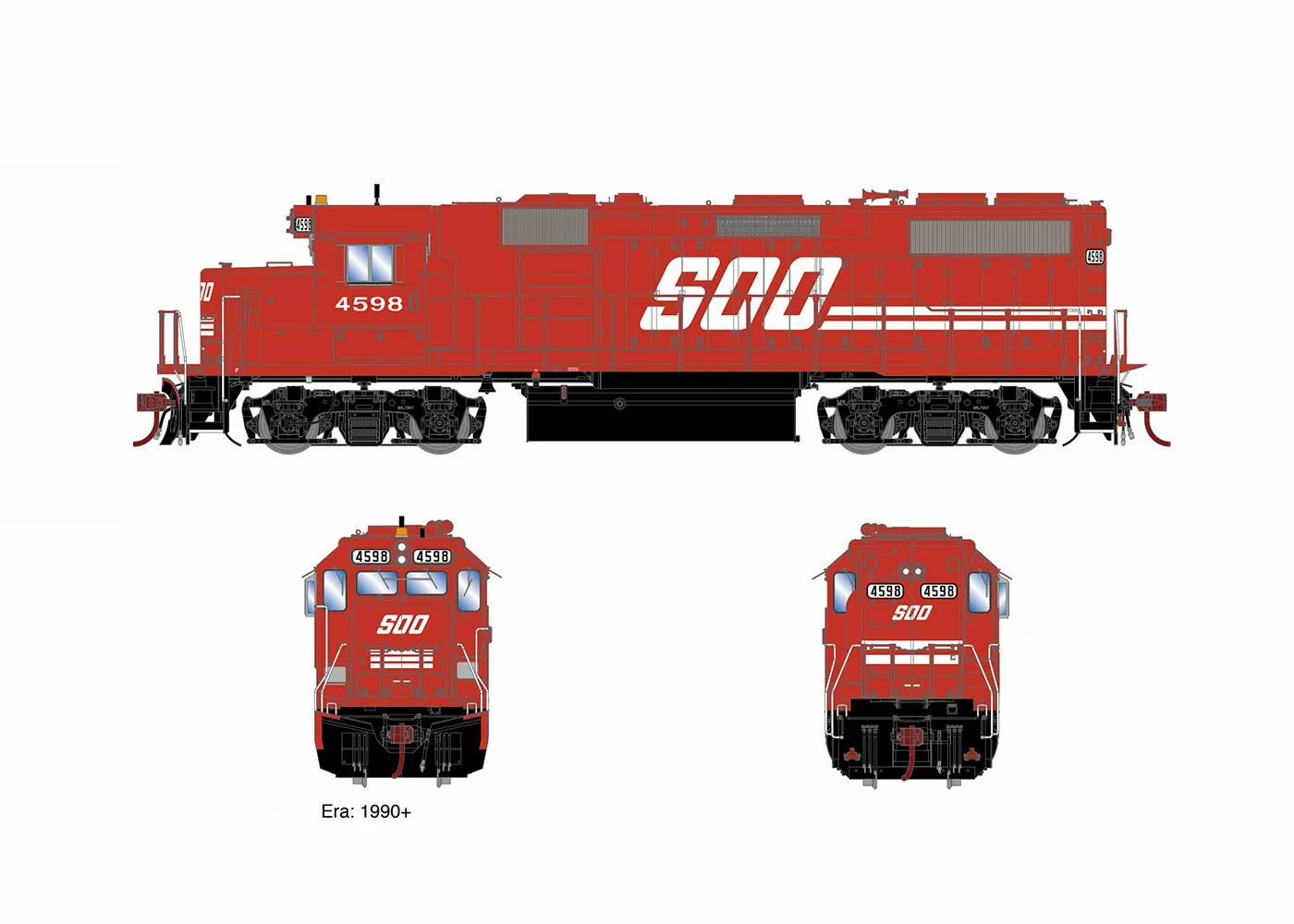
Athearn Genesis HO EMD GP39-2, Standard DC, SOO #4599, ATHG65400
$96.99
- Shop with Confidence
- Effortless solutions, excellent customer care.
- Worry-Free Shopping with Safe Payments
- Prompt service, every time.

Athearn Genesis HO EMD GP39-2 Phase II, Standard DC, Soo Line Railroad, #4599
Athearn Item #ATHG65400
SOO FEATURES:
- Phase II GP39-2
- Early exhaust stack
- Welded cab side panels with armrests
- Long hood mounted Leslie S-3 horn
- Illuminated Xenon strobe, effect w/ DCC+Sound
- 3-Pane all weather cab window on engineer side
- 81” nose with ratchet brake
- Front anticlimber, rear drop step
- 2900 gallon fuel tank
LOCOMOTIVE FEATURES:
- Fully-assembled and ready-to-run
- DCC-ready features Quick Plug™ plug-and-play technology with 21-pin NEM connector
- Scaled from prototype resources including drawings, field measurements, photographs, and more
- Accurately-painted and –printed paint schemes
- Coupler cut levers
- MU hoses
- Trainline hose
- See through cab windows
- Full cab interior
- Walkway tread
- Fine-scale Celcon handrails for scale appearance
- Windshield wipers
- Lift rings
- Wire grab irons
- Detailed fuel tank with fuel fillers, fuel gauges, & breather pipes
- Sander lines
- McHenry scale knuckle couplers – Kadee compatible
- Genesis driveline with 5-pole skew wound motor, precision machined flywheels, and multi-link drivetrain
- All-wheel drive with precision gears for smooth & quiet operation
- All-wheel electrical pickup provides reliable current flow
- Wheels with RP25 contours operate on all popular brands of track
- LED Lighting for realistic appearance
- Heavy die-cast frame for greater traction and more pulling power
- Packaging securely holds for the model for safe storage
PROTOTYPE SPECIFIC INFORMATION
In the decade between 1974 and 1984 , EMD produced the GP39-2 for seven North American railroads. The basic design followed most four axle road diesel switchers for the time. Borrowing improvements from the GP38-2 and GP40-2 designs, this mid-horsepower road switcher utilized a turbocharged 12-cylinder EMD 645E3 diesel engine for its prime mover. With 4 fewer cylinders, the smaller engine provided a distinctive long hood on the phase II and phase III bodies, where the clean room/engine compartment doors were set back from the cab further than predecessor locomotives.
Sensitivity to fuel economy in the 1970s justified the GP39-2 in the locomotive market. It also laid the ground work for EMD to start exploring locomotive designs that utilize engines with larger piston displacement yet possess fewer cylinders. This approach has become the foundation to modern locomotive technology.
| Manufacturer's Suggested Retail Price | 199.98 |
|---|---|
| UPC | 797534654006 |
| Scale | HO |
| DCC | Standard DC |
| Item Returns | This item can be returned |
Be the first to review “Athearn Genesis HO EMD GP39-2, Standard DC, SOO #4599, ATHG65400”
Related products
Reviews
There are no reviews yet.